WINDOW STYLES
Casement Windows
The tightest-sealing operating window made. Crank the handle, the sash swings out on hinges, and the whole opening becomes one clear pane of glass.
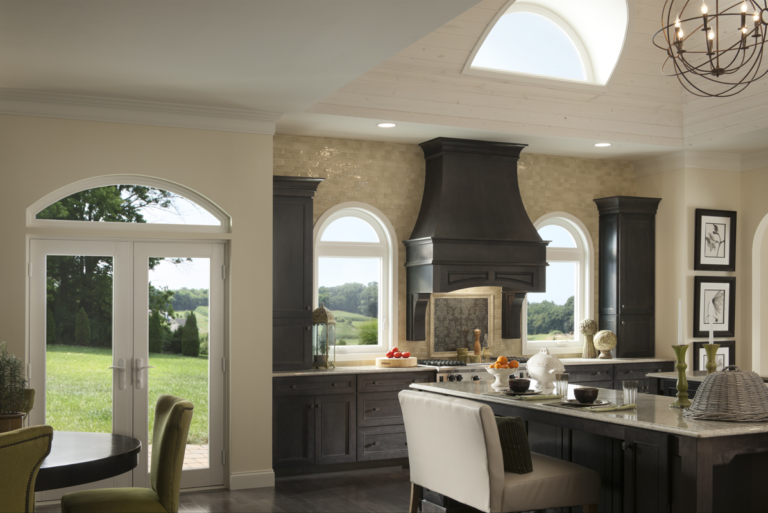
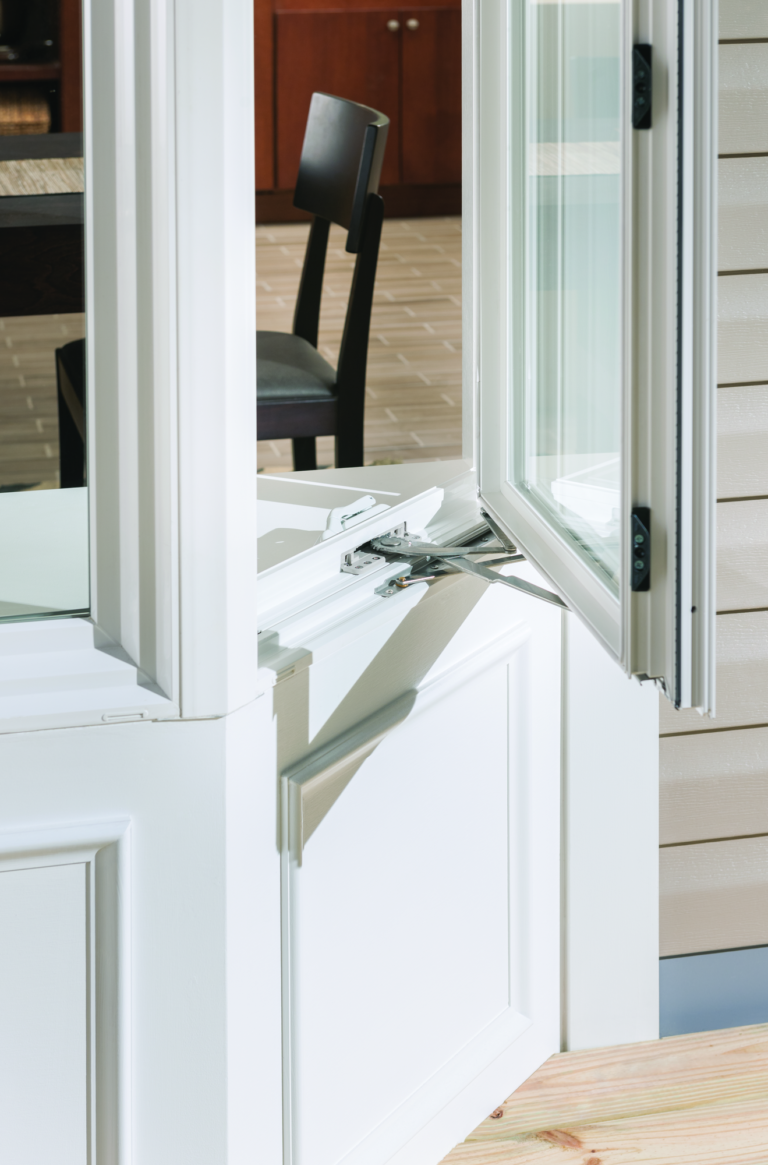

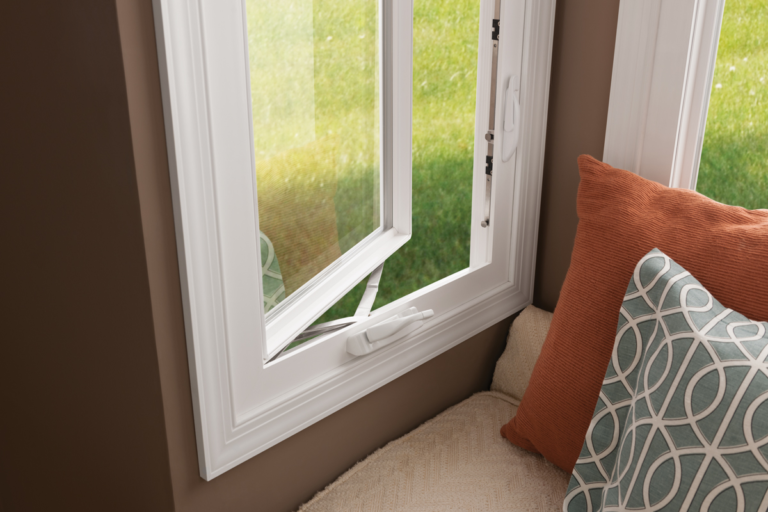
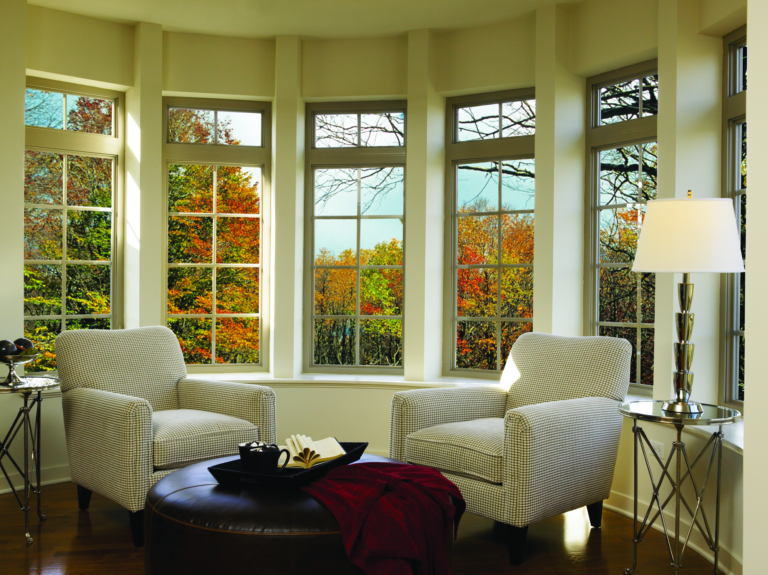
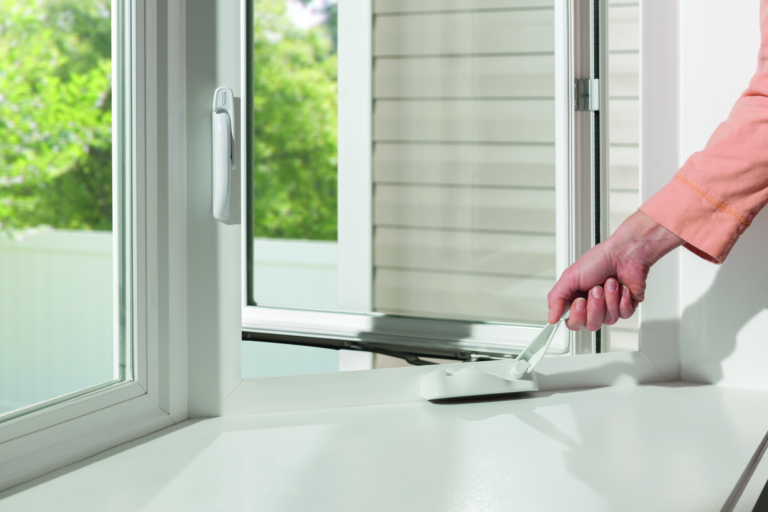
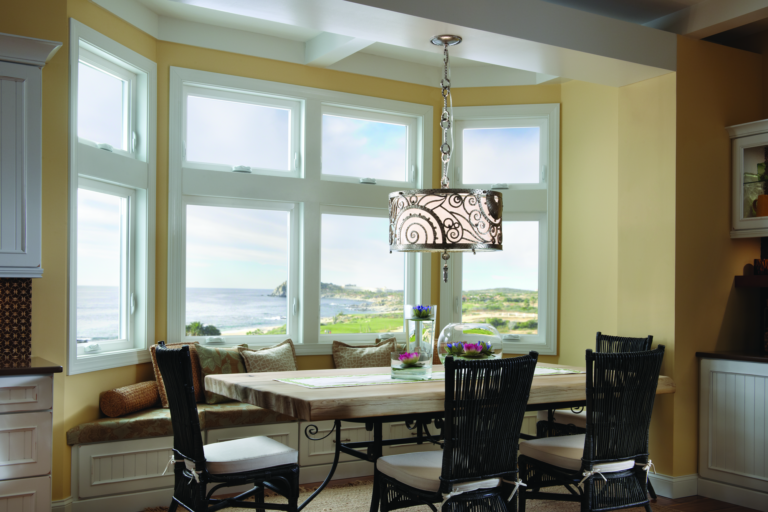
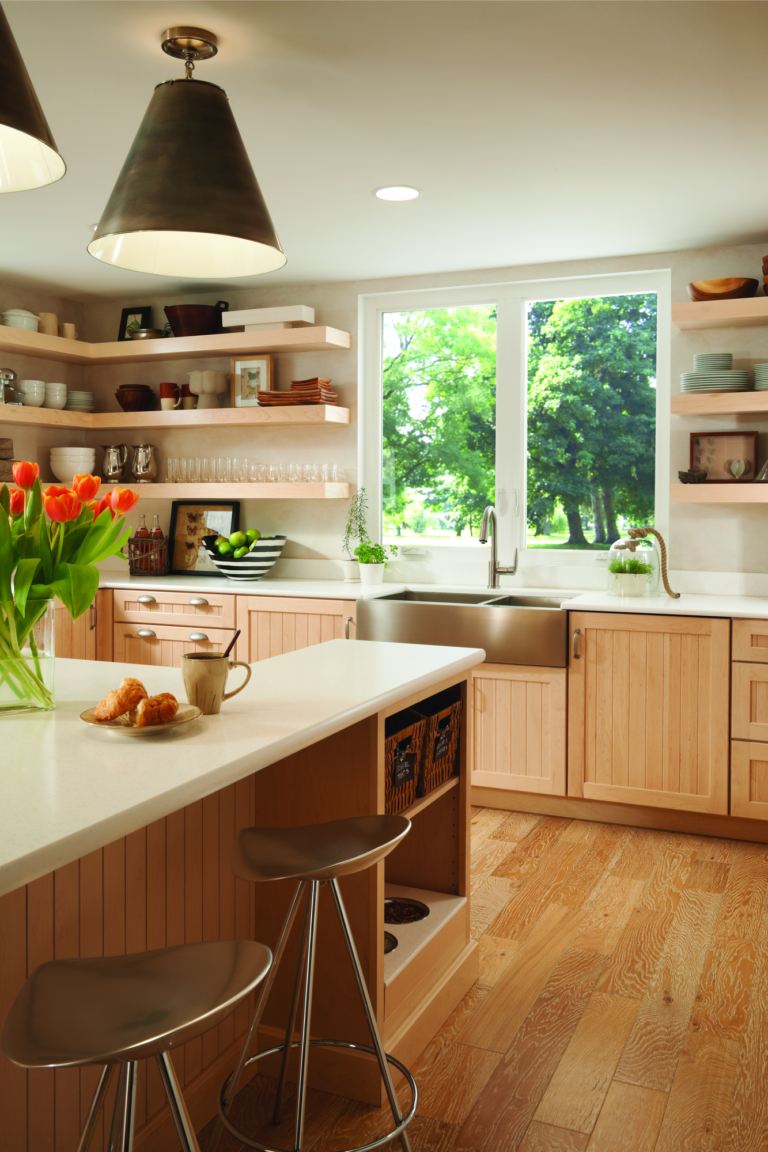
Casement windows hinge at the side and swing outward, operated by a hand crank. Because the sash compresses against weatherstripping when closed (rather than sliding past it like a double hung), casements seal more tightly than any other operating window. That makes them the top performer for energy efficiency and noise reduction. They also catch wind from the side and direct it into the room, which is uniquely useful for cross-ventilation in PNW summer weather.
How casements work
Casement windows hinge at one side and swing outward, operated by a hand crank at the bottom of the frame. A folding handle on most modern casements lets the crank tuck flush with the frame when not in use, so it doesn’t interfere with window treatments. The sash compresses against weatherstripping all the way around when closed, which is why casements seal better than any other operable window.
Why casements are the energy-efficiency leader
The compression seal is the key. On a double hung or slider, the sash slides past brush weatherstripping, which is reasonably effective but not airtight. On a casement, the closing action presses the sash firmly against a continuous gasket, creating a near-airtight seal. Combined with Low-E glass, this is the closest you can get to the energy performance of a fixed window while still being able to open it.
Where casements work best
Anywhere ventilation and energy efficiency are priorities. Kitchens above sinks where you can’t reach the crank from across the room are an exception worth mentioning. Casements are also excellent for catching prevailing breezes since the open sash acts like a scoop, redirecting wind into the room. They suit contemporary, modern, and craftsman-influenced architecture particularly well.
Things to consider
Casements swing outward, so they’re not ideal where they’d hit a deck railing, a porch column, plantings near the foundation, or window screens that interfere with the exterior. The crank mechanism has more moving parts than a double hung, though modern hardware from the brands we carry is engineered for decades of use. Casements typically cost a bit more than double hungs in the same series.
Series we install in this category
Every series we install offers casement windows, which makes this the most flexible style for matching budget, material preference, and architectural look. The choice usually comes down to material and tier rather than style availability.
MILGARD
Premium
Tuscany
The PNW favorite. Premium vinyl with a traditional look.
- Wider frame with shadow lines that mimic wood
- Smooth folding nesting handle
- Full Lifetime Warranty plus glass breakage
Best for: Traditional and transitional homes where you want premium vinyl with the classic casement aesthetic.
MILGARD
Premium
Trinsic
The contemporary choice. Slim frames, maximum glass.
- Slimmest frame in Milgard’s vinyl lineup
- Hardware that practically disappears
- On-trend black-on-black option
Best for: Modern and contemporary homes where clean sightlines and large glass areas drive the design.
MILGARD
Value
Style Line
The smart-budget option. Quality Milgard vinyl at a friendlier price.
- Slim profile with equal sightlines
- Same Milgard construction as premium series
- Lifetime Limited Warranty
Best for: Budget-conscious replacements where you want Milgard quality without the premium tier upgrades.
MILGARD
Premium
Ultra Series
The longevity play. Fiberglass that outlasts almost everything else.
- Best U-factors in Milgard’s lineup
- Minimal thermal expansion vs vinyl
- Repaintable if your taste changes
Best for: Long-term homeowners who plan to stay 15 plus years and want the most durable casement frame available.
MILGARD
Premium
A250 Aluminum
Architectural strength. Slimmer than vinyl, stronger than wood.
- Built-in thermal break addresses old aluminum issues
- Slim profile supports larger glass areas
- Anodized and architectural finish options
Best for: Modern and Northwest contemporary homes where slim aluminum sightlines are central to the design.
CASCADE
Premium
Cascade Series
Northwest manufactured. Equal sightlines that capture the wood window look.
- Engineered specifically for western US climates
- AutoLock self-latching hardware
- AAMA and NFRC certified
Best for: PNW homes where regional manufacturing and climate-specific engineering matter.
CASCADE
Value
WinPro
Cascade quality, value tier. Same energy tech, simpler profile.
- Same EC and EC+ glass as premium Cascade Series
- Clean contemporary profile, no accessory grooves
- Lifetime Warranty for original owner
Best for: Value-conscious projects where you want PNW manufacturing and modern energy performance.
PLY GEM
Luxury
MIRA
Top of the line. Real wood interior, aluminum-clad exterior.
- Solid wood interior, stainable to match your home
- 46 exterior color options
- Up to 4x more efficient than single-glazed
Best for: High-end remodels and custom homes where the interior look matters as much as the exterior performance.
PLY GEM
Premium
West Pro 700
The premium West-region vinyl. Triple-pane available.
- Extended frame depth handles extreme weather
- Triple-pane glass option for maximum efficiency
- Co-extruded black exterior with matching black interior
Best for: New construction and major remodels where you want the deepest energy performance available in vinyl.
Which one is right for you?
For most homes, a premium vinyl casement like Tuscany or Cascade Series delivers the best balance of energy efficiency, durability, and cost. If you want the absolute lowest U-factor and the longest lifespan, Ultra fiberglass or West Pro 700 triple-pane vinyl are the top performers. For high-end remodels with a wood interior, MIRA is in a tier of its own. Aluminum A250 is the right pick if architectural sightlines are central to the design. We’ll walk through specific options in person during your consultation.
Common questions
Yes, measurably so. The compression seal on a casement is tighter than the sliding seal on a double hung, which means lower air infiltration. With the same glass package, a casement will typically have a slightly better U-factor and noticeably better air-leakage rating. The energy difference is most apparent in cold winters and during windy conditions.
It depends on the depth of your sink and counter. The crank handle has to be reachable. We typically recommend casements over deep sinks only when the window sits close enough to the counter edge that the crank is within easy reach. For wide sinks or deep counters, a slider or double hung is often the more practical choice. We’ll measure during your consultation.
The hinge design redirects most water away from the opening, but heavy rain blowing sideways can still come through if the window is open. The good news is closing a casement is a quick crank, and the seal once closed is extremely tight. Many homeowners use casements specifically because they can confidently leave them open for ventilation in light rain.
Modern crank hardware from the manufacturers we carry is engineered for tens of thousands of cycles. If a crank does eventually fail, the operator mechanism is a replaceable part covered under most series warranties. We can replace a worn operator without replacing the window itself.
Yes. Casement screens mount on the inside of the window rather than the outside, since the sash swings outward. The brands we carry use a half-screen on smaller casements and a full-frame screen on larger ones, both designed to come out easily for cleaning. Phantom retractable screens are an upgrade option that gives you a screen-free view when the window is closed.
Planning casement windows for your home?
Free in-home consultation. No-pressure estimate. We’ll show you casements from across our lineup and help you compare materials side by side.