WINDOW STYLES
Bay & Bow Windows
The architectural statement. Bay and bow windows project outward from the wall, adding interior space, dramatic light, and a panoramic view that flat windows can’t deliver.
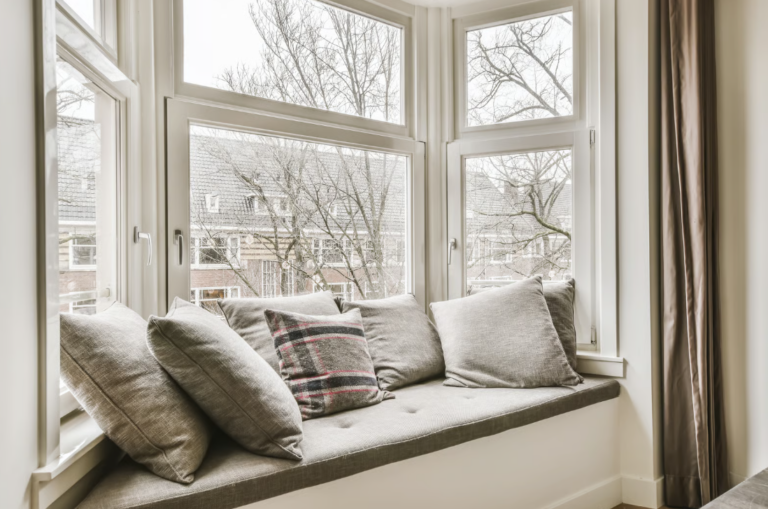
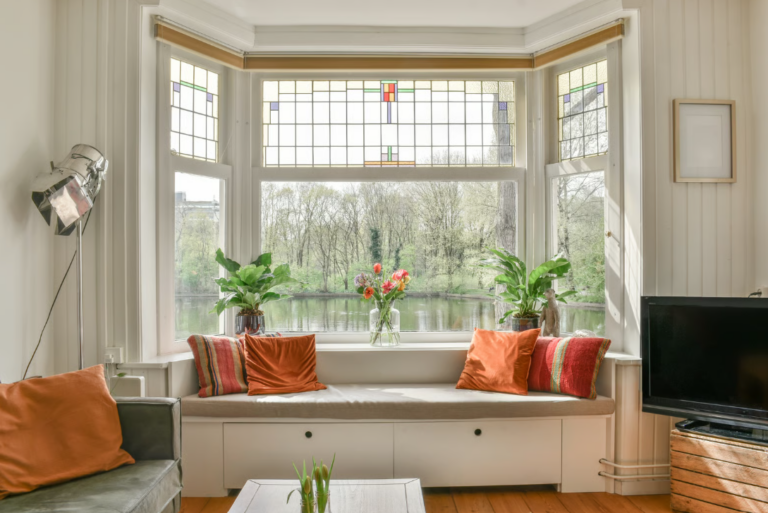
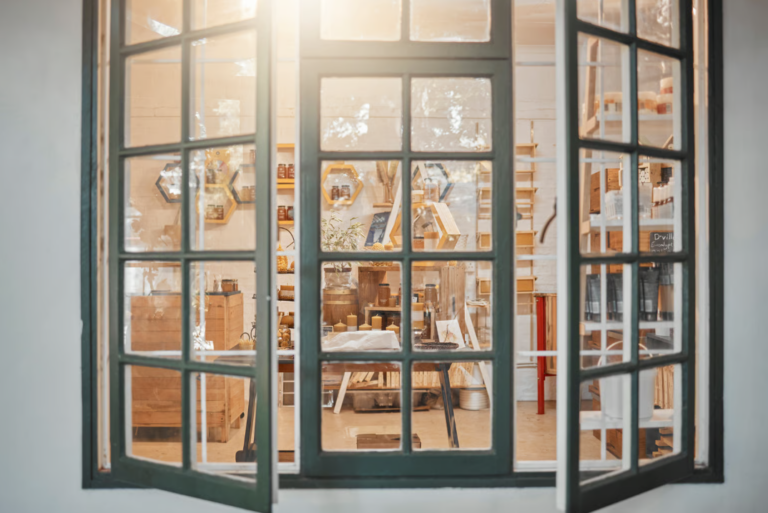
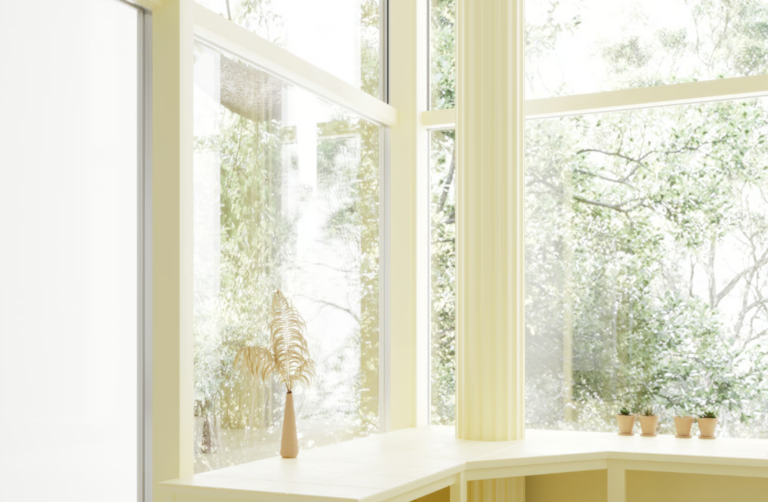
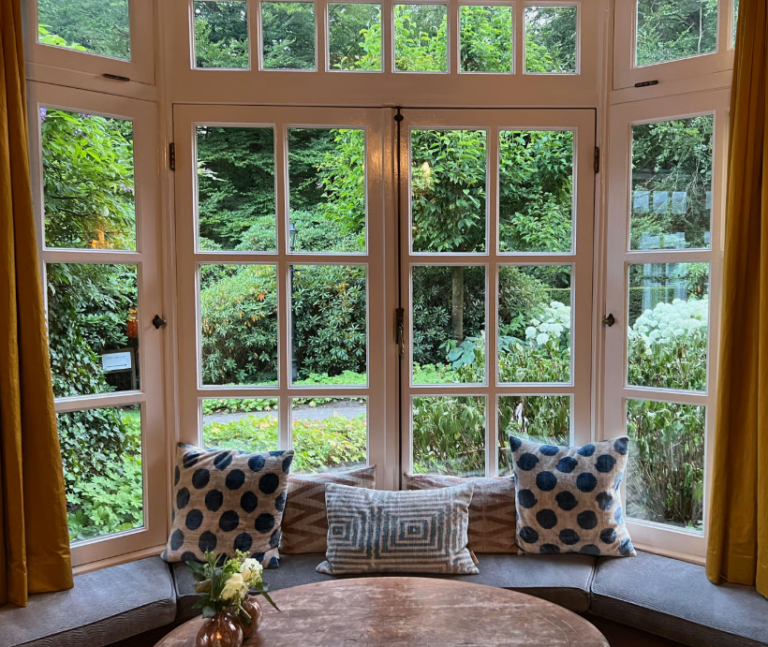
Bay and bow windows are multi-unit assemblies that project outward from the home’s exterior wall, creating a small bumped-out alcove of glass. A bay window typically uses three units at angled joints (a flat picture window in the middle with two angled units flanking it). A bow window uses four to six units in a gentle curve. Both add usable interior floor space, often used for window seats, plant displays, or breakfast nooks, and both create a dramatic exterior architectural feature.
Bay versus bow
A bay window has three units with sharp angled joints, usually a flat picture window in the middle and two angled units (often casements or double hungs) on either side. The result reads as a clean three-sided projection. A bow window has more units (typically four to six) arranged in a gentle arc, which gives a softer rounded shape. Bays project further out and have a sharper architectural character; bows are subtler and curve smoothly.
What you gain
Square footage, light, and view. The projection adds roughly 12 to 36 inches of interior floor space, perfect for a window seat or display ledge. Light pours in from three (bay) or more (bow) angles, which transforms a room. The view widens because you’re looking through multiple panes facing different directions instead of one flat plane.
Structural and installation considerations
Bay and bow windows are heavy multi-unit assemblies that project beyond the home’s exterior wall. They need adequate structural support beneath, often including a small roof above (called a cap), and they require careful framing to integrate with the existing wall. We handle the full installation including cap roof framing if needed. Bay and bow projects are typically more involved than standard window replacements.
Operating versus fixed configurations
On a bay window, the flanking units (the angled ones on either side of the center) are usually operating windows for ventilation, while the middle picture window is fixed. The configuration is flexible: you can specify casements, double hungs, or sliders for the flanking units depending on your preference. Bow windows can be all-fixed for maximum view, or alternate fixed and operating units around the curve.
Series we install in this category
Three of our series build bay and bow window assemblies: Milgard Tuscany, Cascade Series, and Ply Gem MIRA. The assembly typically uses a picture window in the middle with casements or double hungs flanking, all built in the same series for visual consistency.
MILGARD
Premium
Tuscany
The PNW favorite. Premium vinyl with a traditional look.
- Wider frame with shadow lines that mimic wood
- Smooth folding nesting handle
- Full Lifetime Warranty plus glass breakage
Best for: Traditional and transitional homes where you want premium vinyl with traditional sightlines.
CASCADE
Premium
Cascade Series
Northwest manufactured. Equal sightlines that capture the wood window look.
- Engineered specifically for western US climates
- AutoLock self-latching hardware
- AAMA and NFRC certified
Best for: PNW homes where regional manufacturing and climate-specific engineering matter.
PLY GEM
Luxury
MIRA
Top of the line. Real wood interior, aluminum-clad exterior.
- Solid wood interior, stainable to match your home
- 46 exterior color options
- Up to 4x more efficient than single-glazed
Best for: High-end remodels and custom homes where the interior look matters as much as the exterior performance.
Which one is right for you?
Tuscany is the most popular choice for traditional and craftsman homes, with the wider frame profile that suits the architectural drama of a bay window. Cascade Series is the right pick if Pacific Northwest manufacturing and the equal sightline aesthetic matter to you. MIRA is the high-end option, with a real wood interior that’s particularly striking on a bay or bow assembly. We’ll walk through configuration options and structural considerations during your consultation.
Common questions
Significantly more. You’re buying three to six window units in one assembly, plus the structural support and exterior cap roof in many installations. Expect bay and bow projects to run 3 to 6 times the cost of a single equivalent flat window. They’re a meaningful investment, justified by the architectural impact and added interior space.
It depends on the existing opening. Replacing an existing bay or bow with a new one of the same size is straightforward. Adding a new bay or bow where one didn’t exist before requires enlarging the wall opening, adding structural support beneath the projection, and often building a small cap roof above. We handle all of this and will scope the work specifically for your home during the consultation.
Not when installed correctly. The risk areas are the cap roof above the projection and the flashing where the assembly meets the existing wall. Our installation includes proper flashing, weather seals, and (where needed) a small sloped cap roof that sheds water away from the assembly. A poorly installed bay or bow can leak; a properly installed one performs as well as flat windows for decades.
Yes, this is one of the most common uses. The projection creates a small alcove that’s the right size for a built-in bench, often with storage underneath. We can coordinate with your contractor or carpenter on the interior buildout, or recommend partners we work with in the Puget Sound area.
Modern bay and bow assemblies with Low-E glass are as energy-efficient as their constituent windows, since each individual unit is a fully sealed modern window. The exception is the area beneath the projection (the cantilever) which needs proper insulation. Our installations include insulating the cantilever floor and ceiling, so the whole assembly performs like a normal exterior wall section.
Planning a bay or bow window for your home?
Free in-home consultation. No-pressure estimate. We’ll discuss configuration options, structural considerations, and timing for your project.