WINDOW STYLES
Awning Windows
Hinged at the top, swinging outward at the bottom. Awning windows are the answer for ventilation during PNW rainy weather, since the open sash acts as a shield over the opening.
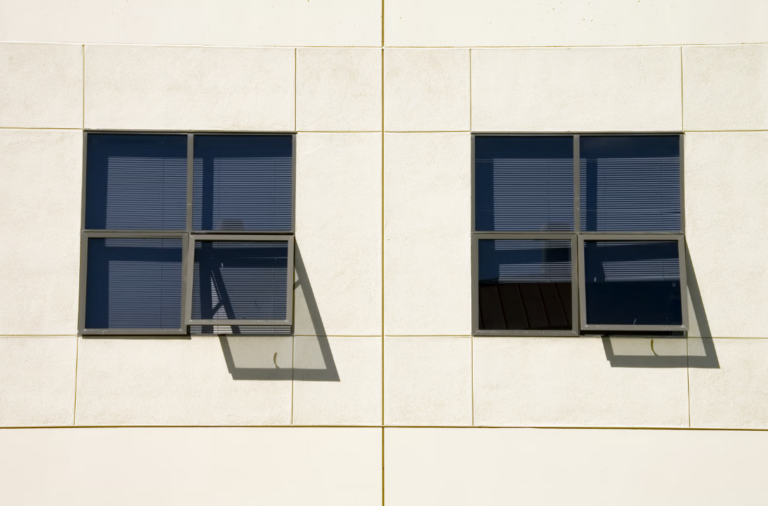



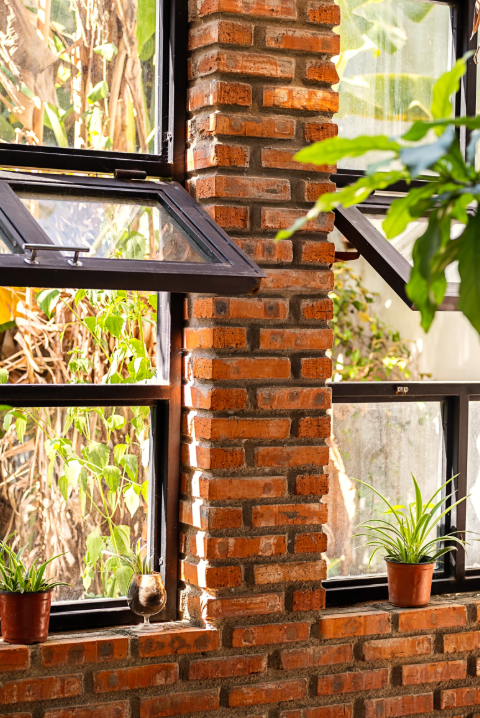
Awning windows hinge at the top and swing outward at the bottom, operated by a crank or push-out mechanism. The open sash creates an angled shelf above the opening, which sheds rainwater away from the interior. That’s a uniquely useful feature in Puget Sound weather, where you often want airflow but not the rain that comes with it. Awnings also seal tightly when closed, with the same compression-seal performance as casements.
How awnings work
An awning window’s sash is hinged across the top edge of the frame and pushes outward at the bottom. A crank or pull-handle operates it. When open, the sash sits at an angle that directs rain away from the opening and channels airflow upward into the room. Closing pulls the sash back against weatherstripping all the way around, creating a tight seal.
The rain advantage
This is the defining feature of awnings. Other operating windows are usually a choice between ventilation and rain protection. An open awning gives you both. For a region that sees rain most months of the year, that pairs naturally with how Northwest homeowners actually use windows. Many of our customers add awnings in bathrooms, kitchens, and basement spaces where steady airflow matters and steady weather doesn’t.
Where awnings fit best
Awnings are common above larger fixed picture windows, where they provide ventilation without breaking the sightline. They also work as standalone windows in bathrooms, laundry rooms, basements, and other spaces where a smaller opening is enough. Anywhere you want to leave a window open through wet weather, an awning is the right call.
Things to consider
Awnings swing outward, so the same constraints as casements apply: they’re not ideal where they’d hit a deck rail, a planter, or a path. Awnings are also usually smaller than casements or double hungs, so they’re rarely a primary view window. For best results, pair them with picture windows above or beside, which is a common architectural pattern.
Series we install in this category
Every series we install offers awning windows. The right pick comes down to material, tier, and how the awning needs to coordinate with the picture or other operating windows alongside it.
MILGARD
Premium
Tuscany
The PNW favorite. Premium vinyl with a traditional look.
- Wider frame with shadow lines that mimic wood
- Smooth folding nesting handle
- Full Lifetime Warranty plus glass breakage
Best for: Traditional and transitional homes where you want premium vinyl with traditional sightlines.
MILGARD
Premium
Trinsic
The contemporary choice. Slim frames, maximum glass.
- Slimmest frame in Milgard’s vinyl lineup
- Hardware that practically disappears
- On-trend black-on-black option
Best for: Modern and contemporary homes where clean sightlines and large glass areas drive the design.
MILGARD
Value
Style Line
The smart-budget option. Quality Milgard vinyl at a friendlier price.
- Slim profile with equal sightlines
- Same Milgard construction as premium series
- Lifetime Limited Warranty
Best for: Budget-conscious replacements where you want Milgard quality without the premium tier upgrades.
MILGARD
Premium
Ultra Series
The longevity play. Fiberglass that outlasts almost everything else.
- Best U-factors in Milgard’s lineup
- Minimal thermal expansion vs vinyl
- Repaintable if your taste changes
Best for: Long-term homeowners who plan to stay 15 plus years and want the most durable frame material available.
MILGARD
Premium
A250 Aluminum
Architectural strength. Slimmer than vinyl, stronger than wood.
- Built-in thermal break addresses old aluminum issues
- Slim profile supports larger glass areas
- Anodized and architectural finish options
Best for: Modern and Northwest contemporary homes where slim aluminum sightlines are central to the design.
CASCADE
Premium
Cascade Series
Northwest manufactured. Equal sightlines that capture the wood window look.
- Engineered specifically for western US climates
- AutoLock self-latching hardware
- AAMA and NFRC certified
Best for: PNW homes where regional manufacturing and climate-specific engineering matter.
CASCADE
Value
WinPro
Cascade quality, value tier. Same energy tech, simpler profile.
- Same EC and EC+ glass as premium Cascade Series
- Clean contemporary profile, no accessory grooves
- Lifetime Warranty for original owner
Best for: Value-conscious projects where you want PNW manufacturing and modern energy performance.
PLY GEM
Luxury
MIRA
Top of the line. Real wood interior, aluminum-clad exterior.
- Solid wood interior, stainable to match your home
- 46 exterior color options
- Up to 4x more efficient than single-glazed
Best for: High-end remodels and custom homes where the interior look matters as much as the exterior performance.
PLY GEM
Premium
West Pro 700
The premium West-region vinyl. Triple-pane available.
- Extended frame depth handles extreme weather
- Triple-pane glass option for maximum efficiency
- Co-extruded black exterior with matching black interior
Best for: New construction and major remodels where you want the deepest energy performance available in vinyl.
Which one is right for you?
For most awning installations, premium vinyl from Tuscany or Cascade Series is the right starting point. If you’re pairing the awning with a large picture window for a wall of glass, matching the series across both keeps the sightlines consistent. Ultra fiberglass and West Pro 700 are top performers for energy. A250 aluminum awnings suit modern architecture. MIRA is for high-end remodels with a wood interior. We’ll match the awning to the rest of the project during your consultation.
Common questions
Yes, that’s their main selling point. The open sash angles outward and downward, which deflects most rain away from the opening. In heavy windblown rain you may still get some moisture coming in, but for the typical PNW drizzle that runs for hours or days, you can leave an awning open and stay dry inside. This is uniquely useful in our climate.
Very. Awnings use a compression seal like casements, so air-leakage performance is excellent. With modern Low-E glass, awnings are among the most energy-efficient operating windows you can buy. The size constraint (they tend to be smaller) also limits the overall heat-transfer surface, which helps in practice.
Yes, this is one of the most common configurations. The picture window provides a large unobstructed view at eye level; the awning above provides ventilation without interrupting the view. We frequently install these as paired units in living rooms, dining rooms, and stairwell landings. Matching the series across both windows keeps the sightlines clean.
They’re slightly harder to clean than casements because the sash swings outward at an angle, but the exterior glass is reachable from inside through the opening. Most modern awnings also have a lift-out or tilt-in feature that makes cleaning easier. For second-story awnings, a long-handled window squeegee usually does the job from inside.
Not typically. Awnings open outward at the bottom, which doesn’t provide a clear emergency exit path. For egress requirements (basement bedrooms, etc.), a slider, double hung, or casement is the right choice. Awnings are best used as secondary windows for ventilation alongside other operating styles.
Planning awning windows for your home?
Free in-home consultation. No-pressure estimate. We’ll show you awnings from across our lineup and help you plan pairings with picture windows or other styles.